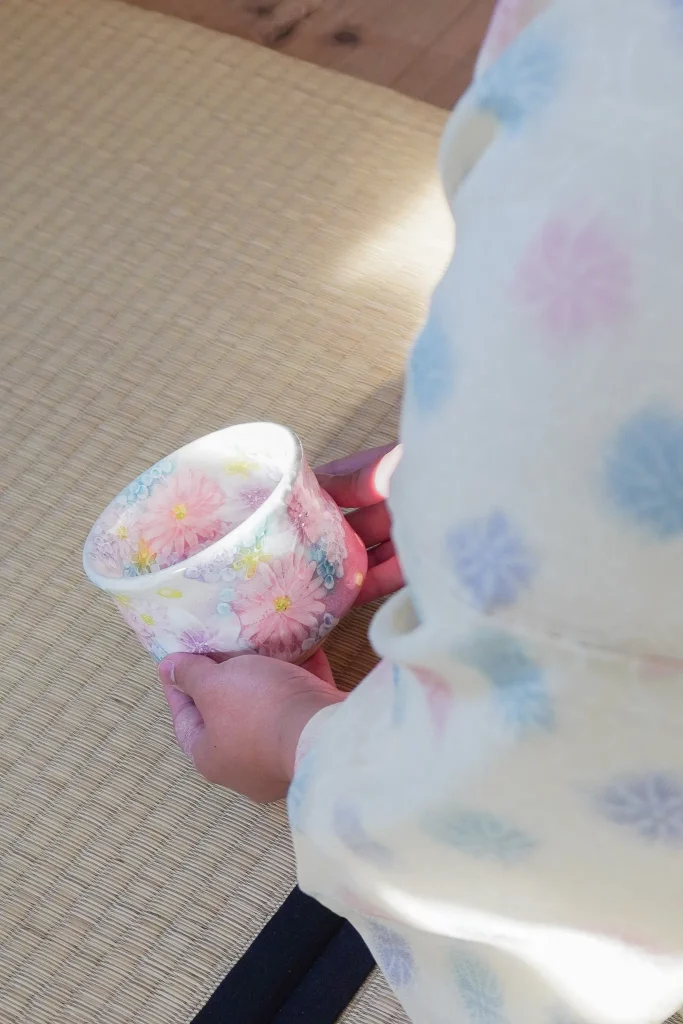
Biyori offers Japanese culture workshops in Düsseldorf including wagashi workshops, matcha experiences, and kimono lessons. Visitors from Cologne, Bonn, and across Germany join our small hands-on cultural experiences.
Matcha Biyori – Matcha, Wagashi & Japanese Culture in Düsseldorf
Bei Matcha Biyori dreht sich alles um authentischen Matcha, handgemachte Wagashi und japanische Kultur.
From matcha workshops and wagashi experiences to kimono and cultural events — we bring a piece of Japan to Düsseldorf and Neuss.
Our Philosophy – A Moment of Calm
Matcha ist für uns mehr als ein Getränk.
It is a daily ritual — a moment to slow down, appreciate the present, and connect with Japanese tea culture.
Diese Haltung spiegelt sich in allem wider, was wir tun — von unseren Workshops bis zu unseren Produkten.
Wagashi – Japanese Sweets & Seasonal Art
Unsere 和菓子 sind traditionelle japanische Süßigkeiten, die die Schönheit der Jahreszeiten widerspiegeln.
Handcrafted using natural ingredients, they are designed to be enjoyed with matcha.
Ob als Workshop, Event oder Geschenk — wagashi verbinden Geschmack mit Ästhetik.
Kimono – Wear Japanese Culture
Neben Matcha und Wagashi bieten wir auch Kimono-Erlebnisse in Düsseldorf:
- 着物レンタル
- Kitsuke (dressing service)
- Kimono workshops
- Photoshoots
Ob für Events, Fotos oder einfach zum Erleben — entdecke, wie es sich anfühlt, einen Kimono zu tragen. Kimono kaufen in Düsseldorf.
Workshops – Experience Japanese Culture
Entdecke unsere Workshops in Düsseldorf & Neuss:
- Matcha workshops
- Wagashi (Nerikiri) workshops
- Cultural experiences inspired by Japanese tea ceremony
Hands-on, beginner-friendly and designed to give you a real experience of Japanese culture in Germany.
➡ Discover workshops & book your experience
More than a Brand
Matcha Biyori is a cultural space.
Ein Ort, an dem du Japan erleben, lernen und genießen kannst — through tea, sweets and shared moments.