
Germany has started to get warmer, so I recently switched my closet to hitoe and summer kimono. Every year I notice the same thing—I probably own more summer kimono than I actually wear.
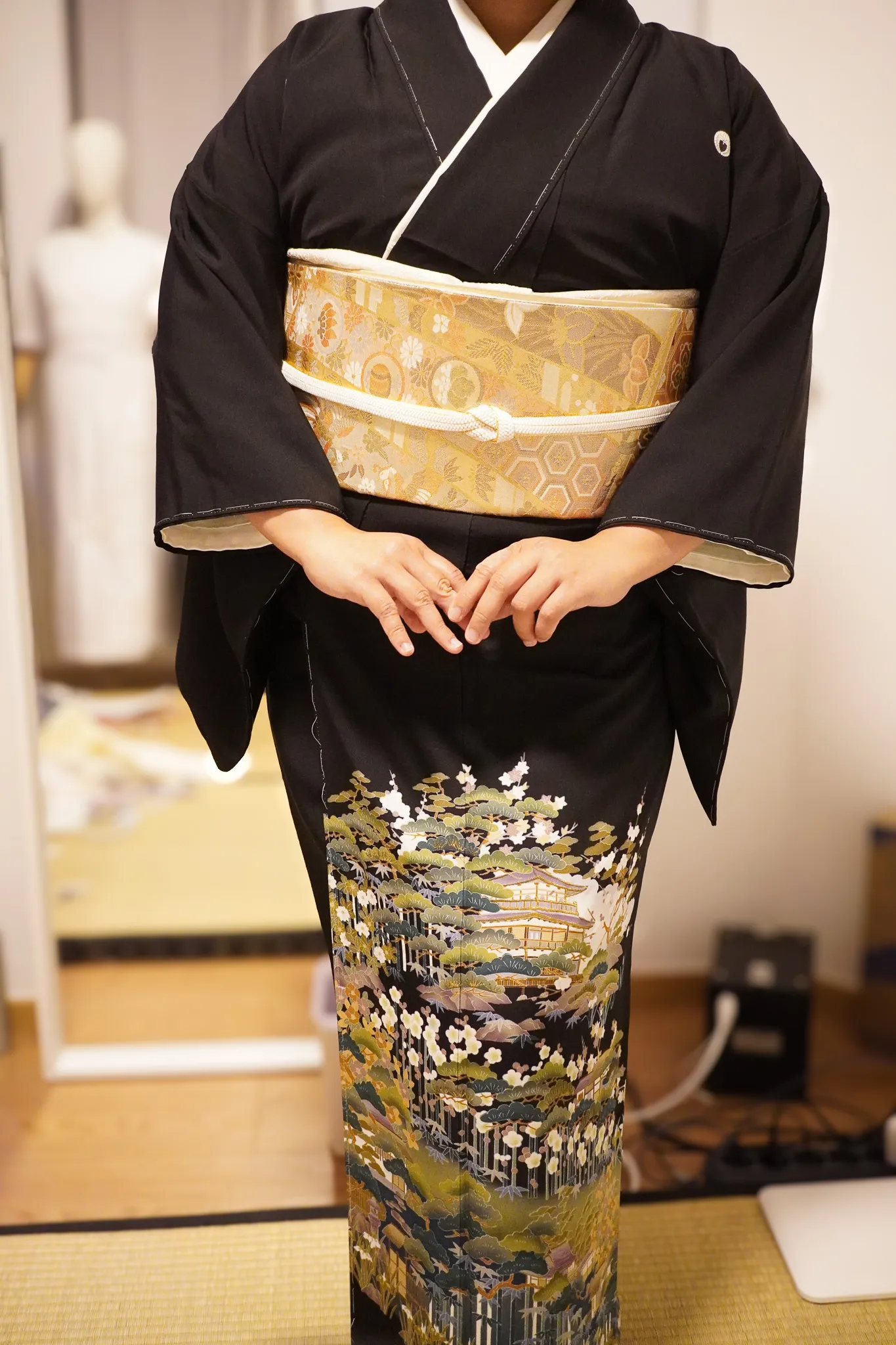
While reorganizing, I decided to try on a kurotomesode that was passed down to me from my husband’s grandmother. It has the family crest, so it’s clearly meant for formal occasions. I was told she never had the chance to wear it, which makes it feel a bit different from the other pieces I own. It’s not something I chose myself, but something I’ve been entrusted with.

The size is just about right—ギリギリ. It fits, but there’s not much room to adjust. It also came with a nagajuban, although I’m not sure if they originally belonged together. The nagajuban is quite small, which makes wearing everything properly more difficult.
Both pieces are still new, with the shitsuke threads intact. So technically, they’ve never really been worn. I decided not to remove them yet. Once you take them off, it feels like a clear step into actually “using” the kimono, and I’m not quite there yet.
Another thing I realized again: tomesode is genuinely difficult to wear on your own. Together with furisode, it’s probably one of the hardest types. A big reason is the hiyoku. It adds an extra layer that needs to sit correctly at the collar and hem, and if the balance is even slightly off, it shows immediately. Managing that while keeping everything else in place takes a lot more control than a standard kimono.
And trying this in warm weather was honestly not a good idea. I was sweating quite a lot while adjusting everything, especially since you can’t rush the process. Afterward, I was a bit worried if I might have left any marks, considering the condition is still so pristine.
Still, I’m glad I tried it once. It helped me understand the piece better—not just how it looks, but what it actually takes to wear it.


Leave a Reply