
“How long does it take to learn?”
It’s one of the questions I get the most.
And I understand why. From the outside, kitsuke often looks either very simple or impossibly complicated. The truth is somewhere in between.
It doesn’t take as long as people think. But it also doesn’t work without structure.
My own experience learning kitsuke
When I first started, I didn’t have a clear system.
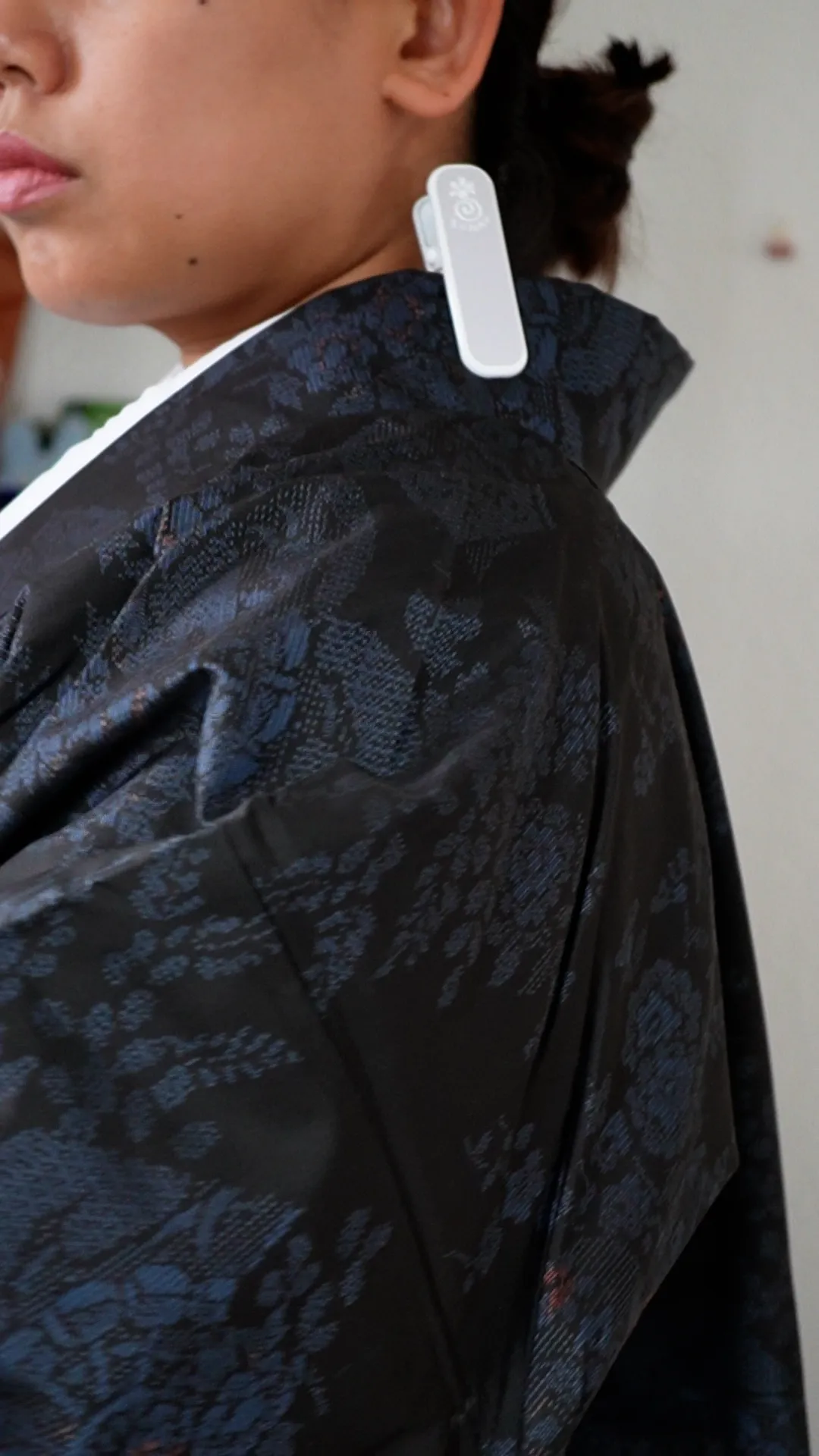
I was learning from different sources, trying to piece things together, and repeating the same mistakes without realizing it. At some point, I could put on a kimono, but it didn’t feel stable. The collar was slightly off, the back wasn’t completely smooth, and something about the overall balance didn’t look quite right — even if I couldn’t explain why.
The real shift came later, when I started learning more systematically. Being guided by people who knew what to look for made a difference I hadn’t expected.
That’s when I understood something important:
Kitsuke is not about memorizing steps. It’s about understanding structure and control.
Once that clicked, progress became much faster.

A realistic timeline
If you’re starting from zero, the beginning usually feels slow. The first few attempts are mostly about getting through the process. You follow steps, adjust things, redo parts, and the result often doesn’t look the way you imagined. That’s normal.
After a bit of repetition, something changes. The flow becomes more familiar. You no longer need to think about every single step, and you start noticing where things go wrong. This is also the point where many people get stuck — not because they can’t continue, but because they don’t know how to correct themselves.
With continued practice, dressing becomes more consistent. The shape stabilizes, and you begin to feel more in control. You’re no longer guessing, but the details still need refinement.
And then, gradually, the movements become more natural. Adjustments happen almost automatically. The final look becomes cleaner, more balanced, and more intentional.
So how long does it really take?
Most people can get into a kimono after a few tries. Looking put-together usually takes a few weeks. Dressing well and confidently — in a way that feels stable and intentional — tends to take a few months.
Not because it’s complicated, but because it’s precise.
Why some people take much longer
If progress feels slow, it’s rarely about effort.
More often, it comes down to how you’re learning. When steps are followed without understanding, small mistakes repeat themselves. Without feedback, it’s difficult to see what needs to be adjusted. And when practice is inconsistent, everything takes longer than it needs to.
Kitsuke is detail-based. A small misalignment early on affects everything that comes after. That’s why it can feel frustrating — not because you’re doing everything wrong, but because no one has shown you what to look for.
Learning kitsuke in Europe
This becomes even more noticeable in Europe.
Access to in-person teaching is limited, and many people rely on short videos or scattered tutorials. These are helpful to get started, but they rarely provide a full picture. You see the steps, but not the reasoning behind them. You can follow along, but it’s harder to improve.
That gap is what slows most people down.

What actually makes the difference
From my experience, the biggest difference is structure.
Once you understand what each step is doing — how it affects the collar, the balance, the overall silhouette — you stop repeating things blindly. You start adjusting with intention. And that’s when progress becomes faster and more consistent.
A more practical way to learn
If your goal is simply to try kimono once, you don’t need much.
But if you want to wear it regularly, to dress yourself properly, and to feel confident in how it looks, then learning with a clear structure makes a difference.
In my online kitsuke lessons, the focus is exactly that: helping you understand what you’re doing, not just copy movements. So that you can practice on your own, improve over time, and build a way of dressing that actually works in your daily life.
Final thoughts
Kitsuke doesn’t take years to learn.
But it does take repetition, attention to detail, and the right kind of guidance. Once those come together, progress is much faster than most people expect.
Learn kitsuke online
If you’d like to learn in a structured and practical way, you can join my online kitsuke lessons.
Leave a Reply