
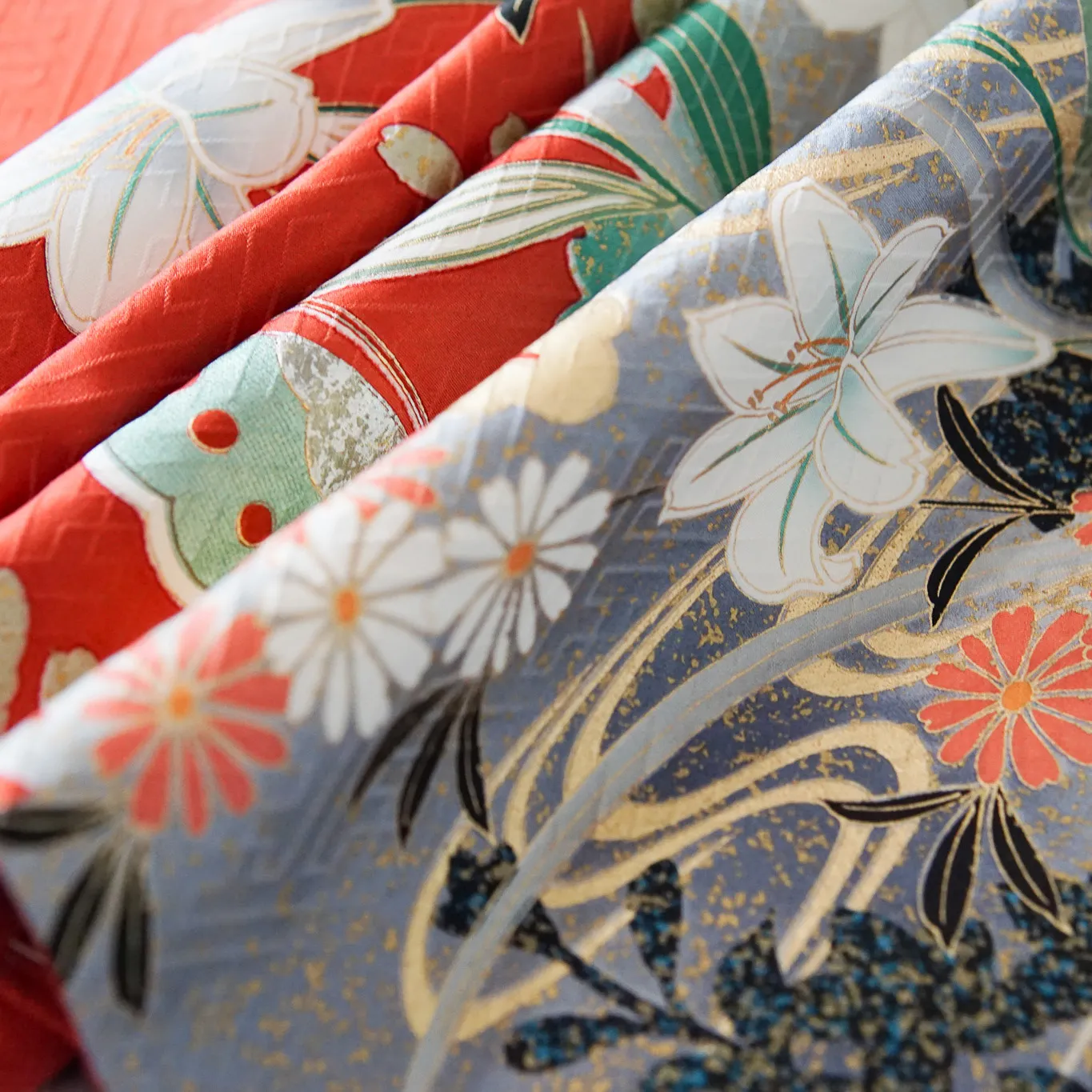
So, you want to buy a kimono but don’t want to break the bank? Good news—buying second-hand kimono is one of the best ways to get started. Whether you’re drawn to the elegance of kimono or simply want something unique for a special occasion, the second-hand market is full of hidden gems.
That said, it can also feel overwhelming at first. Here’s a practical guide to help you find the right kimono—without the stress.
1. Why Buy Second-Hand Kimono?
Second-hand kimono are the most affordable entry point. While new kimono can cost hundreds or even thousands of euros, second-hand pieces can start from as little as 500 JPY.
Another advantage is variety. Unlike new kimono collections, second-hand markets include vintage designs, rare patterns, and discontinued styles. If you’re looking for something unique, this is where you’ll find it.
2. Where to Buy Second-Hand Kimono
Buying in Person
If you live in Japan—or in cities with a Japanese community—flea markets and cultural events are great places to start. In Europe, you can sometimes find kimono in vintage or kilo shops. I’ve personally found pieces in Paris and Düsseldorf.
If you’re in Düsseldorf, Wagokoro e.V. occasionally hosts kimono flea markets worth checking out.
Buying Online
If you’re outside Japan, online platforms are your best option. Facebook groups dedicated to kimono are surprisingly active and helpful.
Specialized stores like Shinei or Sou Japan offer curated second-hand selections. Yahoo! Japan Auctions can also have excellent deals—but always factor in shipping and service fees.
3. What to Look For
Fit First, Design Second
This is the biggest beginner mistake. Kimono sizing is based on height, sleeve length, and body proportions—not S/M/L. Always check measurements before buying.
Casual or Formal?
Think about where you’ll wear it. A casual kimono is very different from a formal one used for tea ceremony or events.
Fabric Considerations
Most second-hand kimono are silk—beautiful but delicate. Synthetic kimono are easier to maintain. Cotton and wool exist but are less common.
4. Understanding Kimono Sizing
Kimono are wrapped garments, so length and width matter more than stretch or fit. Alterations are limited, so choosing the right size from the start is important.
If you’re unsure, use a kimono size calculator to check your measurements.
5. Checking Condition & Quality
Common Issues
Look for stains, discoloration, and odors. Listings don’t always mention everything, so inspect photos carefully.
How Much Damage Is Acceptable?
Minor flaws are normal and often fine—especially if not visible when worn. But avoid strong odors or structural damage.
6. How Much Should You Spend?
Prices vary widely:
- Budget: from ~500 JPY
- Mid-range: ~5,000–15,000 JPY
- Higher-end vintage: 25,000+ JPY
Always include shipping and fees when buying online.
7. What Else Do You Need?
A kimono alone isn’t enough. At minimum, you’ll need:
- Nagajuban (under layer)
- Himo (ties)
- Obi (belt)
You can expand your accessories over time. For a full list, see my guide on kimono dressing essentials.
8. Shopping Tips & Mistakes to Avoid
Common Mistakes
Buying based only on design, ignoring size, and skipping condition checks.
Red Flags
Vague descriptions, few photos, or deals that seem too good to be true.
Finding Hidden Gems
Be patient. The best pieces often appear unexpectedly.
9. How to Care for Your Kimono
Cleaning
Kimono require specialized cleaning. Traditional methods involve taking the garment apart and reassembling it after washing.
If labeled washable (洗える), use a laundry net and gentle cycle. Otherwise, air after wearing and spot clean carefully.
Storage
Store in a dry place. Protect from humidity and insects, and fold properly to maintain shape.
Final Thoughts
Buying second-hand kimono doesn’t need to be complicated. Focus on fit, check the condition, and take your time.
With a bit of patience, you can build a beautiful collection without overspending.
Want help choosing your first kimono?
Join a kimono lesson in Düsseldorf or visit our studio to try different styles in person.
Leave a Reply