
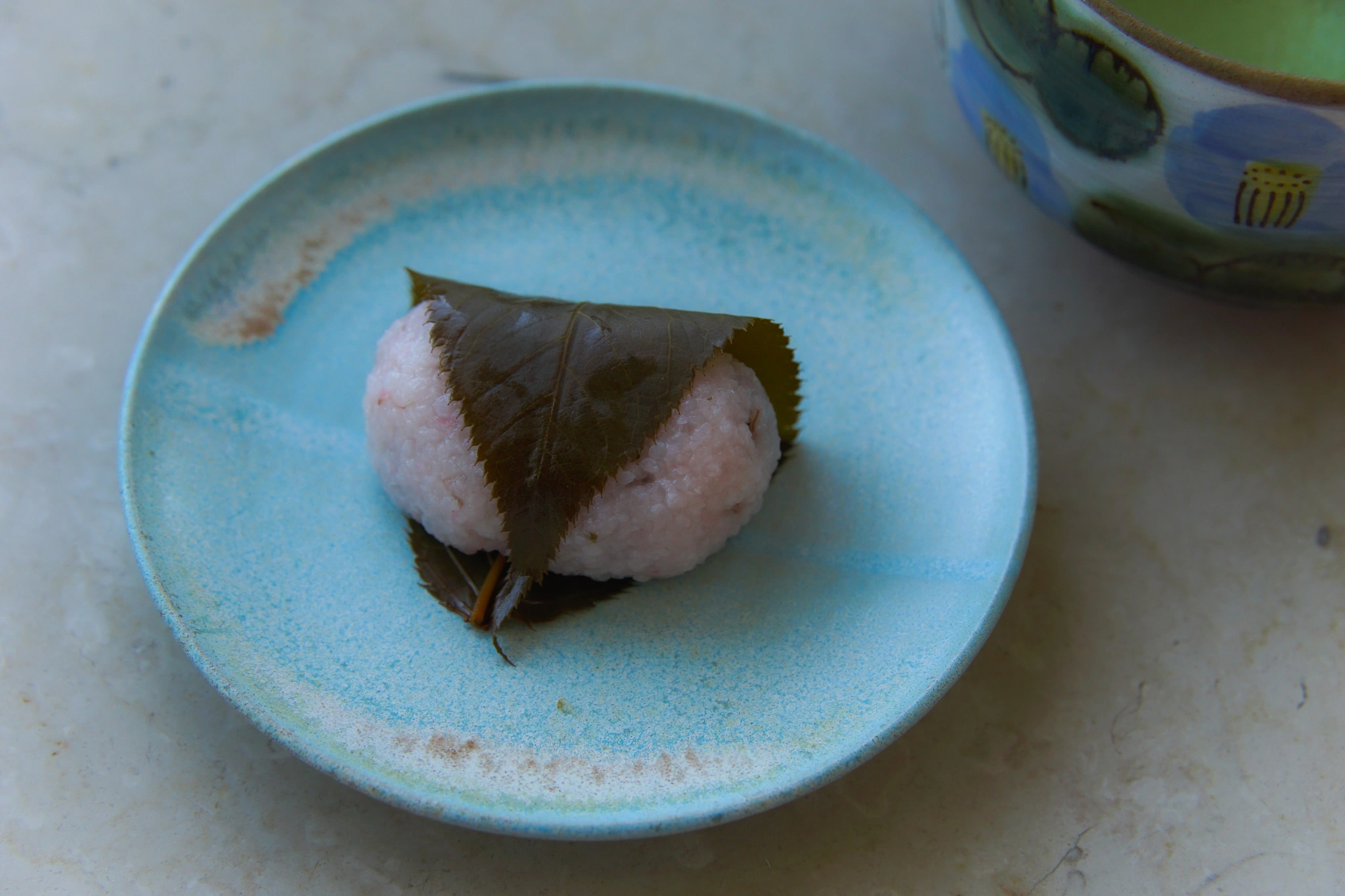
Sakura mochi (桜餅) is a traditional Japanese sweet that quietly announces the arrival of spring.
If you’ve ever seen a soft pink rice cake wrapped in a cherry blossom leaf, you’ve already encountered it — even if you didn’t know its name.
In Japan, sakura mochi appears around the time cherry blossoms begin to bloom. It is often enjoyed during hinamatsuri (Girls’ Day) in early March, but more than a seasonal treat, it is something that captures a very specific feeling: the beginning of spring, when the air is still cool, but something is about to change.
A Sweet Named After Cherry Blossoms
The name itself is simple. “Sakura” means cherry blossom, and “mochi” refers to a rice cake. But sakura mochi is not just about appearance.
Inside, you will usually find smooth red bean paste. The outside is made from rice — either soft and smooth or slightly textured, depending on the region. What makes it distinctive, though, is the salted cherry blossom leaf wrapped around it.
That leaf is not just decoration. It adds a gentle saltiness and a subtle fragrance that many people immediately associate with spring.
A Taste of the Season
In Japan, sweets are often connected to the seasons, and sakura mochi is a good example of this.
The pale pink color reflects the cherry blossoms, which only bloom for a short time each year. Because of this, sakura mochi also carries a sense of something fleeting — a small reminder to enjoy the moment while it lasts.
For many people, the scent of the leaf alone is enough to bring back memories of spring: walking under blooming trees, petals falling, or simply the shift in season after a long winter.
Two Regional Styles


Depending on where you are in Japan, sakura mochi can look quite different.
In the Tokyo area, the Kanto-style version (called chōmeiji) uses a thin, crepe-like layer wrapped around the filling. It feels light and smooth, almost delicate.
In the Kansai region, the version most people might find more familiar is made with dōmyōji-ko, a type of coarse rice. This gives it a slightly textured, soft bite and a more rounded shape.
Both are called sakura mochi, and both are equally traditional — just different interpretations of the same seasonal sweet.
Do You Eat the Leaf?
One question often comes up: do you eat the leaf?
Traditionally, yes. The leaf is pickled in salt, and its slightly salty taste balances the sweetness of the red bean paste. It also adds that characteristic aroma that defines sakura mochi.
Some people prefer to remove it, but eating it together is what creates the full experience.
Enjoying Sakura Mochi with Matcha
Sakura mochi is often served with matcha, especially in a tea setting.
The sweetness of the mochi is meant to be enjoyed first, preparing your palate before taking a sip of matcha. The slight bitterness of the tea then feels softer and more rounded.
It’s a simple pairing, but one that reflects a deeper idea in Japanese tea culture — balance, seasonality, and attention to small details.
A Small Reflection
Even outside of Japan, sakura mochi can feel like a quiet connection to the season.
The color, the scent, the combination of sweet and salty — all of it comes together in a way that is not overwhelming, but gentle and familiar.
It’s not just a dessert, but a small moment of spring you can hold in your hands.
If you’re curious to experience this more closely, I occasionally host small wagashi and matcha workshops where we explore seasonal sweets like sakura mochi.
You’re always welcome to join.
Leave a Reply