


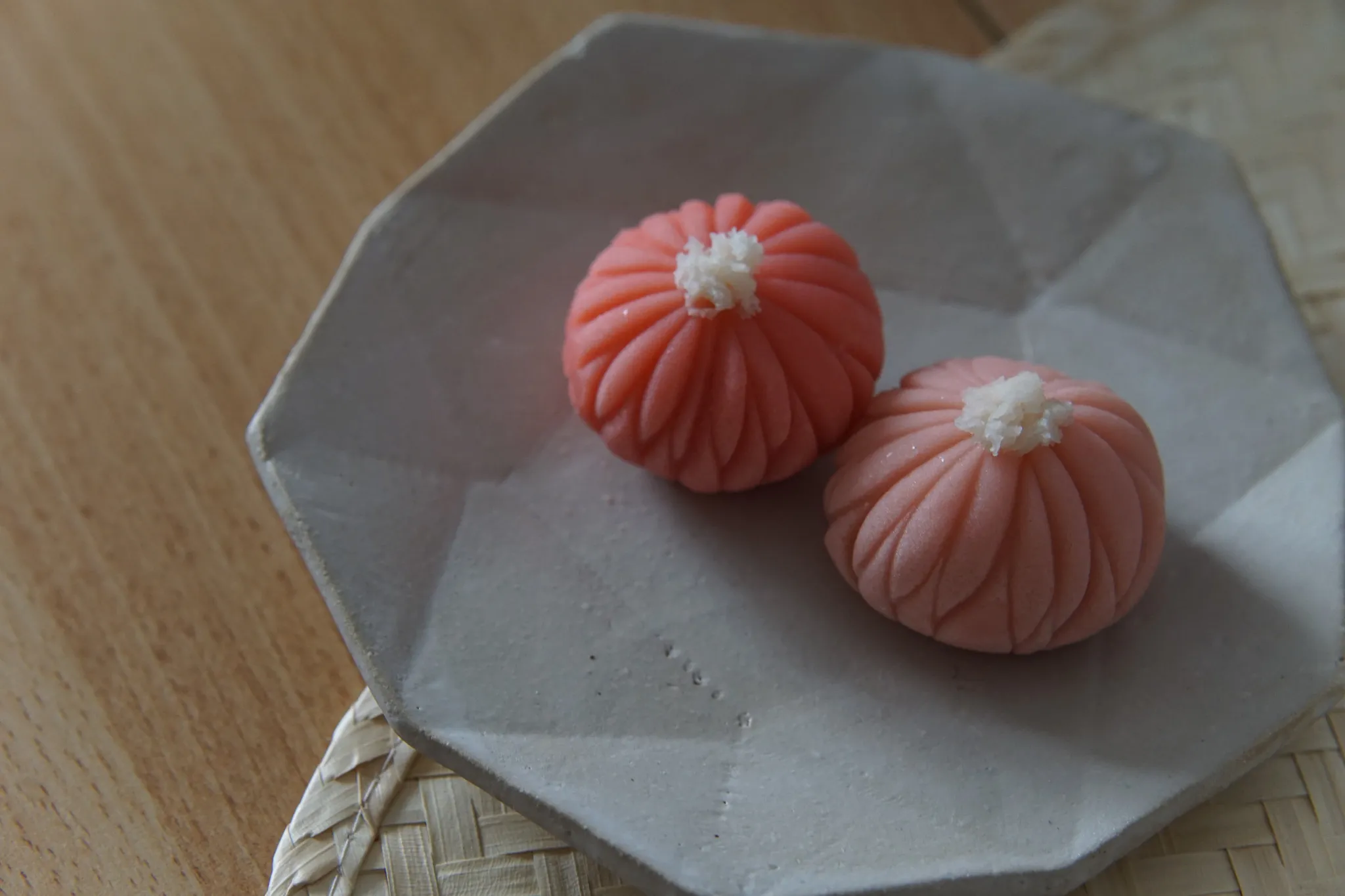
Wagashi are traditional Japanese sweets that developed alongside the culture of tea.
Rather than being only desserts, wagashi are closely connected to the rhythm of the seasons and the aesthetics of Japanese craftsmanship. Their shapes, colors, and ingredients often reflect elements of nature — blossoms in spring, flowing water in summer, autumn leaves, or winter snow.
Many wagashi are served with matcha during tea gatherings, where their gentle sweetness balances the bitterness of the tea.

A Culture of Seasonality
One of the defining characteristics of wagashi is their deep connection to the seasons.
In Japan, sweets are often created to reflect the natural world at a particular moment in time. A wagashi might evoke the first plum blossoms of early spring, the shimmering heat of summer, or the quiet stillness of winter.
This attention to seasonality is part of a broader cultural idea: appreciating the beauty of fleeting moments.
Through wagashi, this sensibility becomes something that can be seen, touched, and tasted.
Craft and Aesthetics
Many wagashi are shaped entirely by hand using simple tools and traditional techniques.
The goal is not only flavor, but also form. The surface of a sweet might resemble a flower petal, flowing water, or a mountain landscape.
This delicate craftsmanship reflects an aesthetic principle found throughout Japanese arts: the idea that small details and careful attention create beauty.
Wagashi and Tea
Wagashi are often enjoyed alongside matcha.
In the tea ceremony, the sweetness of the wagashi prepares the palate for the rich and slightly bitter taste of the tea.
This pairing creates a quiet balance between flavor, texture, and atmosphere.
Wagashi at Biyori
At Biyori, wagashi are shared as a hands-on cultural experience.
Workshops invite participants to explore traditional techniques while learning about the seasonal inspiration and aesthetic ideas behind each sweet.
Rather than focusing only on recipes, the goal is to appreciate wagashi as part of a broader cultural practice where craft, nature, and tea come together.
